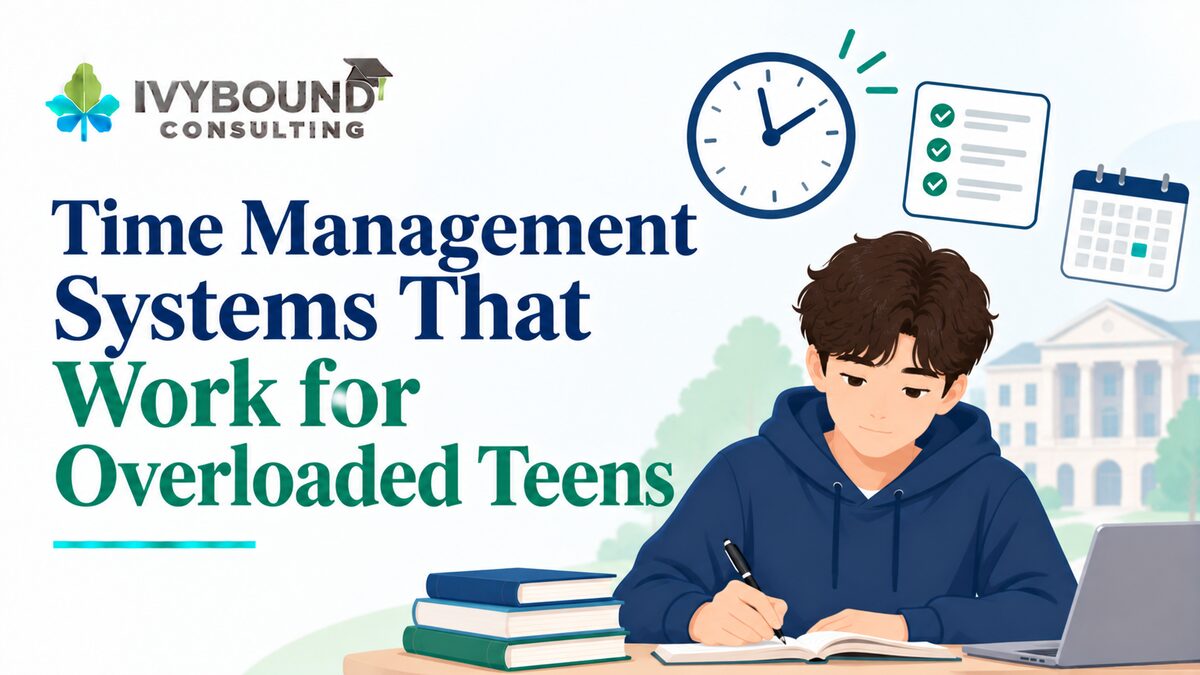
Time Management Systems That Work for Overloaded Teens
Modern high school students are juggling an unprecedented workload that routinely rivals the schedules of full-time corporate executives. Between early morning classes, advanced placement coursework, varsity sports practices, musical rehearsals, part-time jobs, and the looming pressure of college admissions preparation, the average teenager operates in a constant state of cognitive overload. At IvyBound Consulting, we frequently work with extraordinarily bright, driven students who are not struggling because they lack intelligence or work ethic, but because they are relying on broken, reactive time management habits that simply collapse under high-volume demands. Relying on mental to-do lists, late-night cramming sessions, and sporadic bursts of motivation inevitably leads to chronic sleep deprivation, plummeting grades, and severe burnout long before senior year application deadlines even arrive. Reclaiming control over a chaotic schedule requires replacing frantic multitasking with structured, sustainable productivity systems engineered specifically for the adolescent brain. When teens adopt intentional frameworks for capturing tasks, protecting focus blocks, and managing their energy rather than just their minutes, they transform daily stress into calm, predictable academic momentum.
Escaping Reactive Chaos Through Externalized Brain Dumps and Time Blocking
The primary reason overloaded teenagers feel perpetually anxious is that they attempt to use their working memory as a storage facility for dozens of competing assignments, test dates, and extracurricular obligations. Every time a student tries to mentally hold onto an upcoming history essay while sitting in calculus class, they suffer from severe attention residue that degrades their comprehension and increases mental fatigue. The immediate cure for this cognitive bottleneck is establishing a trusted external capture system, such as a unified digital calendar paired with a simple daily task ledger, where every single obligation is recorded the moment it is assigned. Once tasks are safely out of the brain and onto paper or screen, students must abandon traditional to-do lists in favor of intentional time blocking. Instead of staring at a vague, intimidating list of fifteen homework items after dinner, time blocking assigns every specific task a dedicated start and end time on the daily calendar. Scheduling an exact forty-five-minute block for biology lab preparation and a separate thirty-minute window for SAT practice eliminates decision fatigue, prevents endless procrastination, and creates realistic boundaries around how much work can actually fit into a single evening.
Protecting Deep Focus and Eliminating Digital Fragmentation
Even the most meticulously crafted schedule will fail if a student allows their study hours to be shattered by constant smartphone notifications, social media alerts, and background browser tabs. Cognitive science consistently demonstrates that it takes upwards of twenty minutes for the human brain to regain deep concentration after a single brief interruption, meaning a teenager checking messages every five minutes is essentially studying at a fraction of their true intellectual capacity. High-achieving students protect their cognitive bandwidth by implementing strict environmental barriers during their scheduled work blocks, such as placing phones in a separate room, utilizing website blockers, and working in disciplined intervals like the fifty-ten method. Working with total, uninterrupted intensity for fifty minutes followed by a genuine ten-minute screen-free break allows teens to complete complex assignments in half the time it takes their distracted peers. Pairing this focused execution with an understanding of personal energy rhythms ensures that cognitively demanding tasks like analytical writing or calculus problem sets are tackled during peak alertness hours rather than saved for midnight when willpower is completely depleted.
Weekly Reset Rituals and Sustainable Boundaries for Long-Term Resilience
A truly effective time management system is not a rigid prison that leaves zero room for spontaneity, rest, or social connection, but rather a dynamic framework maintained through a consistent weekly reset ritual. Dedicating just thirty minutes every Sunday afternoon to review upcoming syllabus deadlines, map out extracurricular commitments, and batch-prepare study materials prevents unpleasant midweek surprises and restores a sense of agency before Monday morning begins. Equally critical is teaching ambitious teenagers how to audit their commitments and establish healthy boundaries around perfectionism and over-commitment. True productivity is never about cramming twenty-four hours of nonstop labor into every single day, which only guarantees diminishing returns and emotional exhaustion. When students build deliberate recovery buffers, mandatory sleep cutoffs, and guilt-free downtime directly into their weekly architecture, they preserve the mental clarity, creativity, and resilience required to excel both inside the classroom and throughout the college admissions journey.
If your student is feeling overwhelmed by competing academic and extracurricular demands and needs a personalized roadmap to balance high school excellence with college preparation, we are here to help. Contact IvyBound Consulting today to schedule a strategy session with our expert advisors, where we will help your family build sustainable habits, prioritize high-impact goals, and navigate the admissions process with confidence.
Schedule a free consultation with IvyBound Consulting to meet Ruchi S. Kothari and take the first step toward a future that reflects who you truly are. Let’s talk!