A Standout Portfolio for Ivy-Level STEM Applicants
In the modern landscape of elite college admissions, presenting top-tier grades and flawless standardized test scores in science and mathematics is no longer enough to guarantee a spot at an Ivy League or Ivy-Plus institution. Thousands of applicants from across the globe apply each cycle with maximum grade point averages and perfect scores on advanced placement exams, creating an incredibly crowded pool of academically qualified candidates. To distinguish yourself among these high-achieving peers, you must demonstrate a level of intellectual vitality and practical execution that goes far beyond classroom achievements. Admissions committees evaluating prospective science, technology, engineering, and mathematics majors actively search for candidates who possess a distinct intellectual hook, proven research initiative, and the ability to solve real-world problems. Building a dedicated, highly organized STEM portfolio is the single most effective way to translate your raw technical ability into a compelling case for admission. At IvyBound Consulting, we help ambitious applicants curate, package, and present their scientific endeavors into an undeniable narrative that resonates deeply with university reading committees.
Moving Beyond Textbooks: Independent Research and Applied Technical Projects
The backbone of an exceptional STEM portfolio rests on your ability to step outside the prescribed high school curriculum and engage in original inquiry or applied technical design. Admissions officers at hyper-selective universities are eager to see how you apply theoretical concepts to novel problems, whether through university-partnered lab research, independent algorithmic development, or engineering prototypes. A strong entry in your portfolio should highlight not just the final output, but the entire lifecycle of your intellectual journey, including the initial hypothesis, methodology, technical hurdles overcome, and ultimate findings. Co-authoring a paper submitted to a peer-reviewed journal, presenting a poster at a regional science competition, or publishing an open-source software repository on GitHub provides tangible proof of your technical maturity. When you present concrete evidence of independent research or working code, you prove to reading committees that you are ready to make immediate contributions to university laboratories and research centers from your very first semester on campus.
Contextualizing Your Contribution: Collaboration, Mentorship, and Real-World Impact
While deep technical proficiency is critical, elite institutions are equally interested in how you collaborate within a team and deploy your technical talents to benefit your broader community. STEM disciplines at the highest levels are inherently collaborative, requiring clear communication, interdisciplinary problem-solving, and a commitment to ethical design. Your portfolio should explicitly detail your specific role within any group research, robotic competition, or hackathon, ensuring that your personal contributions are clearly delineated from the work of your peers or lab mentors. Highlighting how your technical work addresses a tangible societal need such as designing a low-cost water filtration sensor for a local community or coding an accessible mobile application for non-profit organizations, adds immense qualitative depth to your profile. Demonstrating that you use your technical gifts to uplift others and address pressing challenges signals to admissions officers that you possess both the intellectual drive and the character required to become a transformative leader in your chosen field.
Curation, Documentation, and Seamless Digital Delivery
The final stage of creating a standout STEM portfolio involves organizing your work into a polished, easily digestible digital format that fits seamlessly within application platform guidelines. Admissions officers spend a limited amount of time reviewing each candidate file, meaning your portfolio materials must be curated with extreme clarity and precision rather than presented as a chaotic dump of raw files. Creating an elegant personal project website, a well-documented digital research abstract, or a structured video demonstration allows readers to grasp the scope and quality of your work within minutes. Every project description should follow a clear narrative structure that explains the problem, your technical solution, the tools or programming languages utilized, and the quantitative impact of the results. By ruthlessly editing your portfolio to feature only your most impactful, sophisticated accomplishments, you ensure that every component reinforces your central narrative as an innovative, highly capable STEM scholar.
If you are aiming for Ivy League STEM programs and want to transform your research, technical projects, and passion for innovation into a standout application portfolio, we are here to guide your journey. Contact IvyBound Consulting today to schedule a comprehensive portfolio strategy session, where our expert advisors will help you refine your technical narrative, document your achievements, and present an extraordinary application to the world's most selective universities.
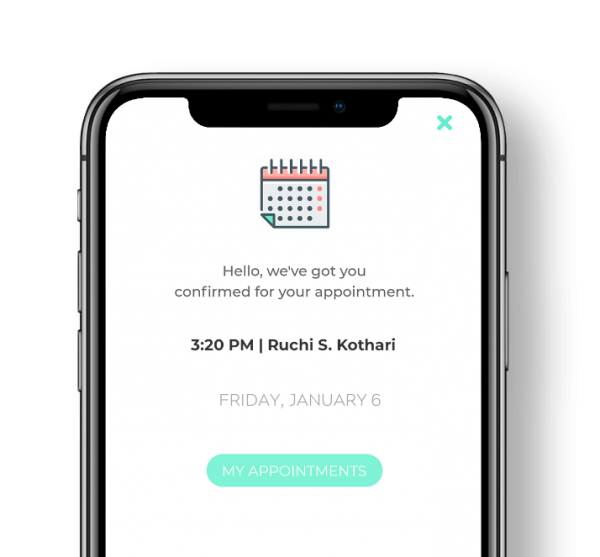
Schedule a free consultation with IvyBound Consulting to meet Ruchi S. Kothari, and take the first step toward a future that reflects who you truly are. Let’s talk!