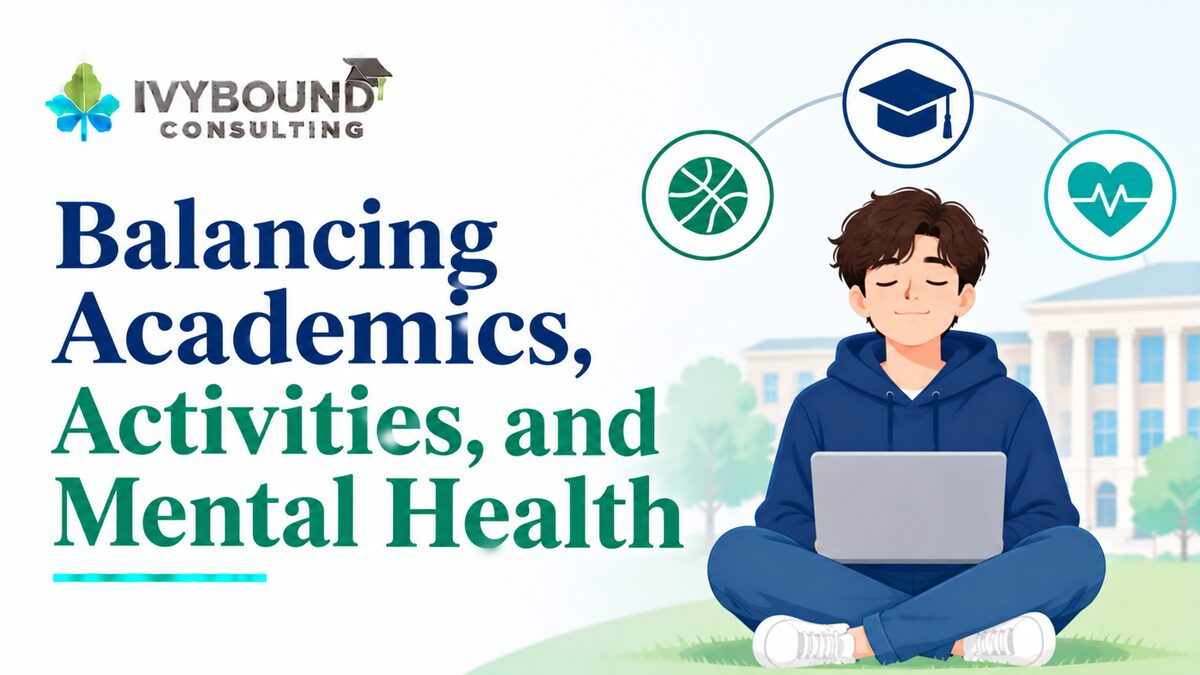
Balancing Academics, Activities, and Mental Health
The modern high school experience has quietly morphed into an exhausting endurance test where teenagers are expected to perform at the level of seasoned professionals while still navigating the normal growing pains of adolescence. Between rigorous Advanced Placement courses, varsity athletics, club leadership roles, community service hours, and standardized test preparation, students are operating on schedules that leave virtually zero room for rest, reflection, or spontaneous joy. At IvyBound Consulting, we frequently encounter bright, ambitious teenagers who are running on fumes, operating under the false assumption that burning the candle at both ends is the only viable path to selective college admissions. This pervasive hustle culture not only erodes physical and emotional well-being, but it actually undermines the very academic and extracurricular excellence students are trying to achieve. Sustainable high performance is never built on chronic sleep deprivation and relentless anxiety; rather, it emerges from intentional boundaries, strategic prioritization, and a deep respect for your own cognitive limits. Learning how to balance the competing demands of rigorous academics, meaningful activities, and personal mental health is not just a survival skill for high school, but the foundational blueprint for thriving in college and beyond.
Dismantling the Myth of Effortless Perfection
One of the primary drivers of student burnout is the toxic cultural expectation of effortless perfection, which demands that teenagers excel at everything simultaneously without ever showing signs of strain. Social media feeds and competitive peer environments amplify this pressure, creating an illusion that everyone else is effortlessly juggling five honors classes, three leadership positions, and a thriving social life on five hours of sleep. In reality, trying to maximize every single category at once inevitably leads to diminishing returns, shallow engagement, and chronic emotional exhaustion. Admissions officers are remarkably adept at spotting the difference between a student who is genuinely energized by their pursuits and a student who is mechanically checking boxes out of sheer obligation. When you give yourself permission to let go of non-essential commitments and focus deeply on a few authentic passions, you reclaim valuable mental bandwidth that immediately elevates the quality of your work. True resilience begins the moment you stop measuring your worth by how busy your calendar looks and start evaluating your days by how aligned your actions are with your genuine values and energy levels.
Strategic Time Architecture and the Power of Intentional Boundaries
Achieving a healthy equilibrium requires treating your time and energy as finite, non-renewable resources that must be budgeted with the same rigor you apply to your hardest academic subjects. Instead of relying on willpower to push through late-night study sessions, high-performing students build structured weekly architectures that protect non-negotiable blocks for sleep, physical movement, and unstructured downtime. Treating eight hours of sleep and thirty minutes of daily decompression as immovable appointments on your calendar sharpens your cognitive focus, dramatically reducing the time it takes to complete homework and absorb complex material. Equally important is mastering the art of the strategic no, which means declining new club invitations, extra committee roles, or social obligations that do not genuinely excite you or support your core priorities. When you establish clear boundaries around your evenings and weekends, you eliminate the low-grade background anxiety of always feeling behind, replacing frantic multitasking with calm, sustained concentration. This disciplined approach to time management proves to both yourself and future admissions committees that you possess the maturity to lead a balanced, self-directed life.
Recognizing Burnout Early and Cultivating Sustainable Recovery Habits
Even the most disciplined schedule will occasionally bend under the weight of midterm exams, tournament weekends, and application deadlines, making it essential to recognize the early warning signs of emotional and physical overload before they spiral into full-blown burnout. Persistent irritability, difficulty concentrating on simple tasks, sudden drops in motivation, and physical symptoms like recurring headaches or stomachaches are your nervous system's way of signaling that your output has exceeded your recovery capacity. Rather than pushing harder when these signals appear, the smartest response is to initiate an immediate micro-recovery protocol, such as stepping away from screens for an evening, spending time outdoors in nature, or talking openly with a trusted parent, counselor, or mentor. Building small, restorative rituals into your daily routine, whether through journaling, music, exercise, or simply sharing an unhurried meal with family, creates an emotional buffer that keeps academic stress from hardening into chronic anxiety. When you treat your mental health as the non-negotiable engine that powers all your academic and extracurricular achievements, you protect your curiosity, preserve your joy, and position yourself to enter college healthy, grounded, and genuinely excited for the next chapter.
If you are feeling overwhelmed by the pressure to do it all and want a personalized roadmap that protects your well-being while maximizing your admissions potential, we are here to support you. Contact IvyBound Consulting today to schedule a one-on-one strategy session where our experienced advisors will help you streamline your commitments, build a sustainable high school plan, and approach the college admissions journey with clarity and confidence.
Schedule a free consultation with IvyBound Consulting to meet Ruchi S. Kothari, and take the first step toward a future that reflects who you truly are. Let’s talk!